Pocket-Sized Wind Energy: The Revolution for Off-Grid Living


I have always had a complicated relationship with off-grid living. On one hand, there is nothing quite like the silence of the mountains or the fresh air of a remote camping spot. On the other hand, there is the panic that sets in when my camera battery blinks red or my phone—my only connection to safety maps—dies.
For years, the solution has been solar. I’ve strapped panels to my backpack, laid them out on rocks, and chased the sun like a sunflower. But let’s be honest: solar has a major flaw. It doesn’t work at night, it hates clouds, and in deep forests, it’s practically useless.
That is why, when I saw the Shine 2.0 from Canada, I stopped scrolling. This isn’t just another gadget; it is a fundamental shift in how we think about portable energy. We are talking about a wind turbine that folds down to the size of a water bottle.
As a tech enthusiast who loves the outdoors, I’ve dug deep into what this device offers, and I believe we might be looking at the missing link in our portable energy kits.
The End of “Sun Anxiety”
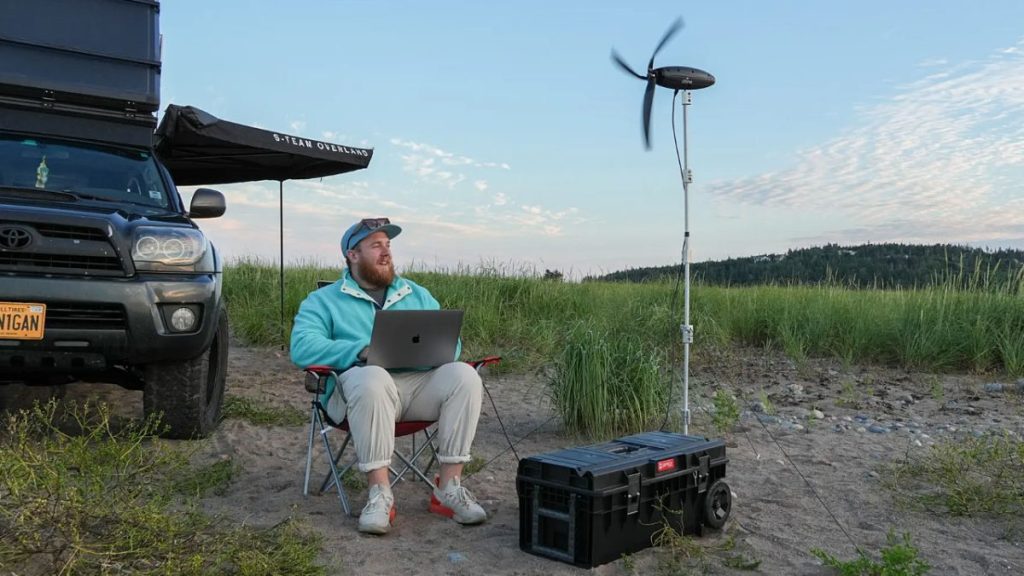
We have all been there. You are camping, it is 6:00 PM, the sun is setting, and your power bank is empty. Your solar panel is now just a heavy placemat.
This is where the Shine 2.0, developed by Aurea Technologies in Nova Scotia, changes the game. The concept is brilliant in its simplicity: Wind doesn’t sleep.

- Nighttime Charging: While you sleep in your tent, the wind is often picking up.
- Storm Resilience: Bad weather usually means no sun, but it almost always means more wind.
I find it fascinating that we have ignored wind energy for personal use for so long, mostly because turbines were huge, loud, and dangerous. Shine 2.0 seems to have solved the physics problem of shrinking a power plant into a backpack-friendly cylinder.
Engineering Magic: From Bottle to Turbine
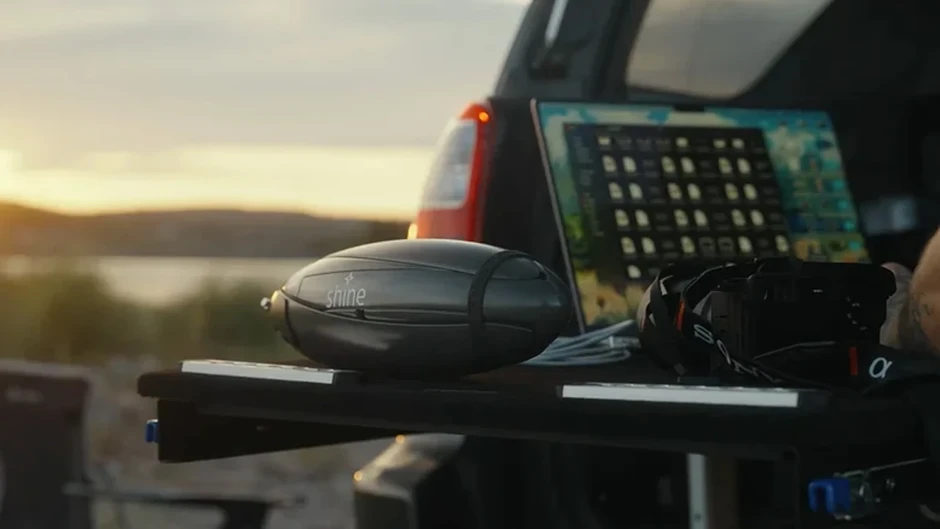
The first thing that struck me was the form factor. When packed away, it looks like a standard 1-liter water bottle. It weighs about 1.3 kilograms (roughly 3 lbs). For anyone who counts grams when packing a rucksack, this is a very acceptable weight for an infinite power source.
How It Works in the Wild
Setting this thing up reportedly takes less than five minutes, which is crucial. If a storm is rolling in, I don’t want to be fumbling with screws.
- Mount: You secure the mount (using guy wires/pegs).
- Expand: The blades unfold.
- Elevate: You place the body on the mount.
Here is the feature that really impressed me: Automatic Yawing. Unlike a solar panel that you have to manually turn to face the sun every hour, the Shine 2.0 automatically swivels to face the wind. You set it and forget it.
The Specs: Does It Actually Have Power?
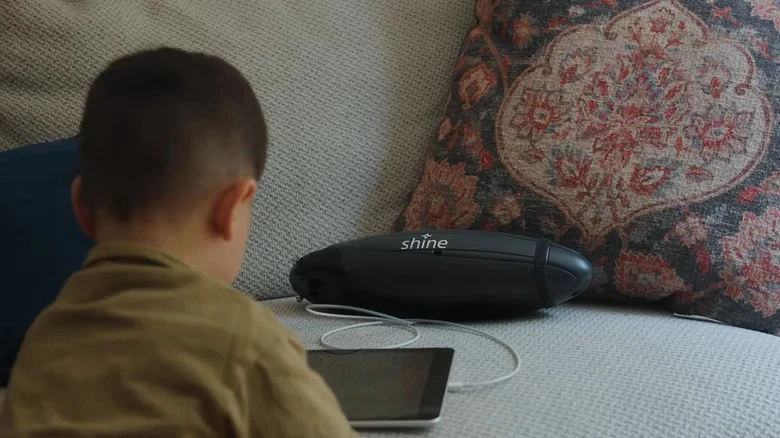
It is easy to make a cool-looking gadget, but does it deliver the juice? I looked at the numbers, and they are surprisingly robust for something this small.
- Output Power: It generates 75 Watts. To put that in perspective, that is enough to fast-charge a laptop, a drone, or multiple phones simultaneously.
- Internal Battery: It’s not just a generator; it’s a storage device. It houses a 12,000 mAh Li-Ion battery. This means even if the wind stops, you have a full bank of power ready to go.
- Wind Requirements: It starts generating at 13 km/h (8 mph) and handles up to 45 km/h (28 mph).
My Take: The 13 km/h starting point is key. You don’t need a hurricane. A stiff breeze is enough to start the electrons flowing.
The Charging Speed
The manufacturer claims that under optimal wind conditions, it can charge a smartphone in just 17 minutes. That is faster than most wall chargers! Even if real-world conditions double that time, getting a full charge in under 40 minutes from thin air is incredible.
Durability and Experience
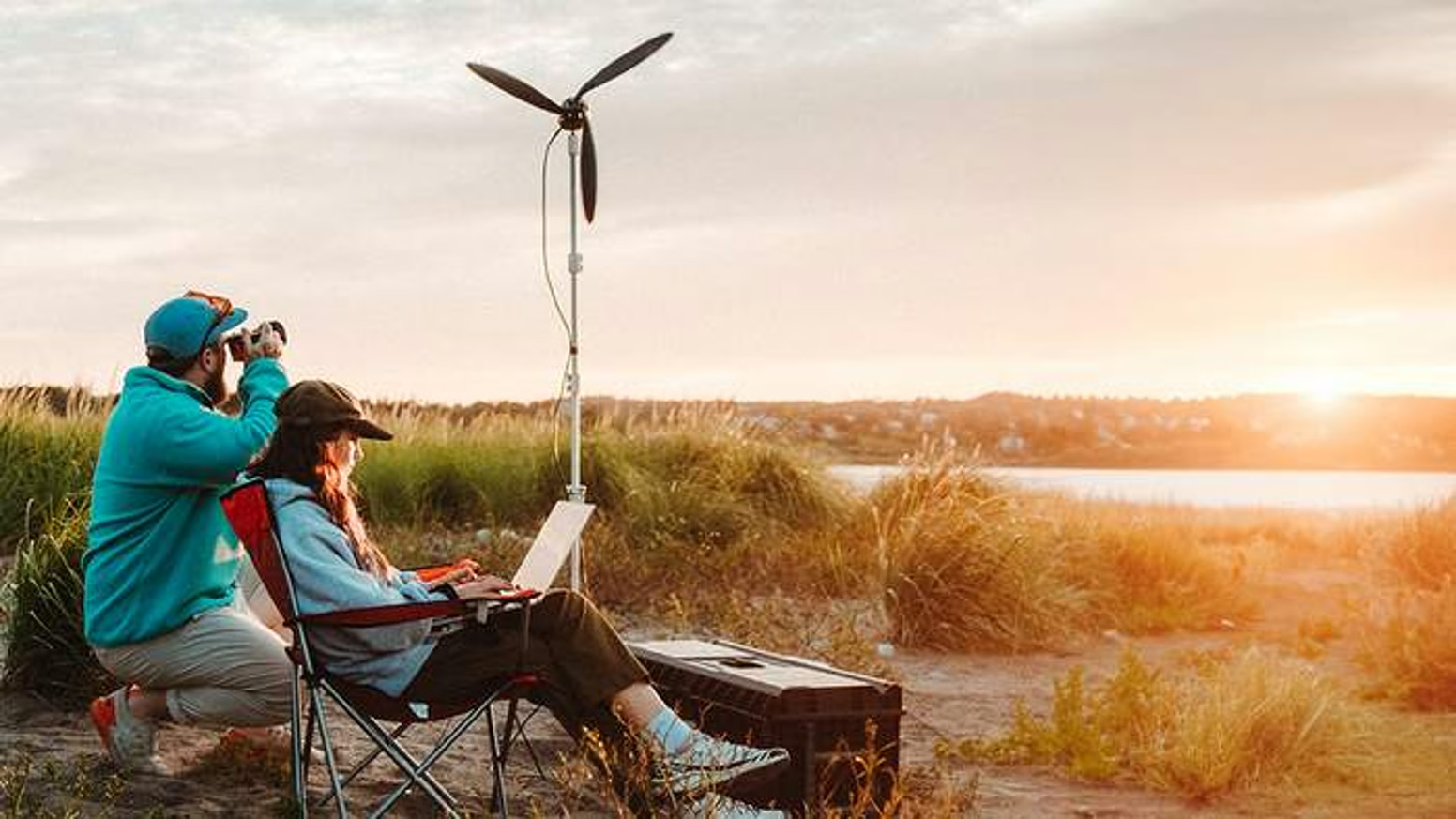
One of my biggest fears with moving parts in the wild is breakage. A solar panel has no moving parts (unless you count me moving it). A turbine spins.
However, Aurea Technologies seems to have anticipated this. The body is made of aircraft-grade aluminum. It is built to take a beating. They also addressed the noise factor. Large turbines sound like jet engines; the Shine 2.0 reportedly produces a sound no louder than moderate rainfall. This is essential. I go to nature for peace, not to listen to a whirring machine.
The App Ecosystem
Of course, it’s 2026 (almost), so there is an app. You can connect via Bluetooth to see:
- Current wind speed.
- Power generation wattage.
- Battery status.
I admit, there is a certain “geeky” satisfaction in sitting in your tent, looking at your phone, and seeing exactly how many watts the storm outside is gifting you.
A Critical Look: Is It Perfect?
I want to be realistic here. I am excited, but I am not blind. There are limitations we need to consider before throwing away our solar panels.
- Moving Parts Wear Out: The device has a rated lifespan of about five years. Solar panels often last 20+ years. You are trading longevity for versatility.
- The Wind Variable: Just as solar needs sun, this needs wind. In a dense, low-altitude forest with zero airflow, this device is just a 1.3kg paperweight.
- Stability: While the guy-wire system looks solid, I would be nervous leaving it unattended in extremely high gusts.
However, as a complementary device? It is unbeatable. If I am packing for a long expedition, I am taking both. Solar for the calm, sunny days; Shine 2.0 for the windy nights and overcast days.
Conclusion: The New Standard for Nomads
The Shine 2.0 is launching to users around April 2026, building on the success of its 2021 predecessor. It represents a maturity in the “off-grid” tech market. We are moving past cheap plastic gadgets into serious, survival-grade engineering.
For digital nomads, van-lifers, and serious trekkers, energy independence is the ultimate luxury. This device brings us one step closer to cutting the cord completely.
I am planning to get my hands on one as soon as possible to test it in the mountains. The idea of brewing my morning coffee using power generated by the wind that shook my tent all night? That is the kind of future I want to live in.
I’d love to hear your strategy: When you are out in the wild, do you trust technology to keep you powered, or do you prefer to disconnect completely?
You Might Also Like;